Book Review: The Culture Code by Daniel Coyle
For our third book of 2026, our Bettering Communities Book Club read our twelfth book - The Culture Code: Secrets of Highly Successful Groups by Daniel Coyle.
Our Reactions to the Book
While some members of our group felt the book was a bit “fluffier” than necessary, overall participants appreciated this book and found the storytelling heavy narrative easy to digest. Many described reading it in one or two sittings and felt that the stories used throughout it helped to move the pace along. At this point, our group has read a dozen books and we’re starting to notice when they cross-reference one another. Culture Code references the workplace culture at Google around being unafraid to challenge ideas (which we learned about in Radical Candor). The book also speaks to the critical role that a manager has in setting the cultural expectations in the high end culinary world (sharing some similar stories from Unreasonable Hospitality). If we read enough of these books, will they all eventually cross-reference one another?

Energy Vampires who negatively influence others
A theme emerging in the beginning of the book is the negative impact that can be caused by “bad apples”, which I suggested we reframe as “energy vampires” - people who suck the good energy out of a team or group setting. It was surprising to learn that we scientifically follow cues from one another and how much damage an individual with a bad attitude can cause on a team or in a project. Some participants shared direct experience with this.
One participant shared a time when they managed an employee who was seen as a “bad apple”, and an after-hours conversation between boss and employee exposed another side of their personality. Some noted that “bad apples” can sometimes be redirected with a new challenge, a leadership opportunity, or a different role within the organization. In local government, sometimes bad apples aren’t a bad hire, but are the choice of the voters. In working with elected officials, it’s best to meet the “bad apple” energy with the good apple energy modeled in the book.
We spoke as well about the damage of tolerating bad apples.
“Whatever you are not changing, you are choosing.” - Dr. Laurie Buchanan
Ensuring culture fit through interviews + probationary periods
One shared element across high performing groups is a high barrier to entry to getting in the door. We learn about what a small percentage of Navy Seals make it through their training, and how it is easier to get into Harvard than it was, at one point, to get a job at Zappos. Zappos former CEO Tony Hsieh was profiled in Culture Code and spoke to how important the initial onboarding process is. He famously offered employees “the offer”, two or so weeks into the monthlong rigorous culture training. It was a test - to see if employees would take the easy way out and just take the money, or stick it out for Zappos culture. *SEE FOOTNOTE
Participants shared that interviews can be a flawed way to measure character or culture fit.
What if HR insists on asking the same exact questions across every interview to make it fully data-driven?
What if someone puts on a good show and is a great interviewer, but not a great employee?
Who do you involve in the interview? The direct reports of the new hire, or the leadership team?
Participants discussed framing questions as very open about organizational culture, and meeting HR in the middle with a data matrix. Questions can measure character and cultural fit, but still be measured equally with a quantitative assessment tool.
Probationary periods are VERY important. It can be difficult to terminate employees who are not a cultural fit later. Probationary periods ensure that the relationship is a good one before long-term investment in one person is finalized.
Picking up the trash as leaders - should we or shouldn’t we?
We had an interesting back and forth about “picking up the trash” as leaders. One of our participants was recognized by a colleague who caught a photo (secretly!) of them shoveling snow outside of their workplace. This colleague felt that this embodied true leadership - someone who didn’t see themselves above doing work that needed to be done. The participant noted that in their early career, a leader had modeled this for them by picking up a piece of garbage on the way to their car. Two small actions created a tremendous ripple effect in what it means to be a leader for the people watching. See the short TED Talk “Everyday Leadership” below.
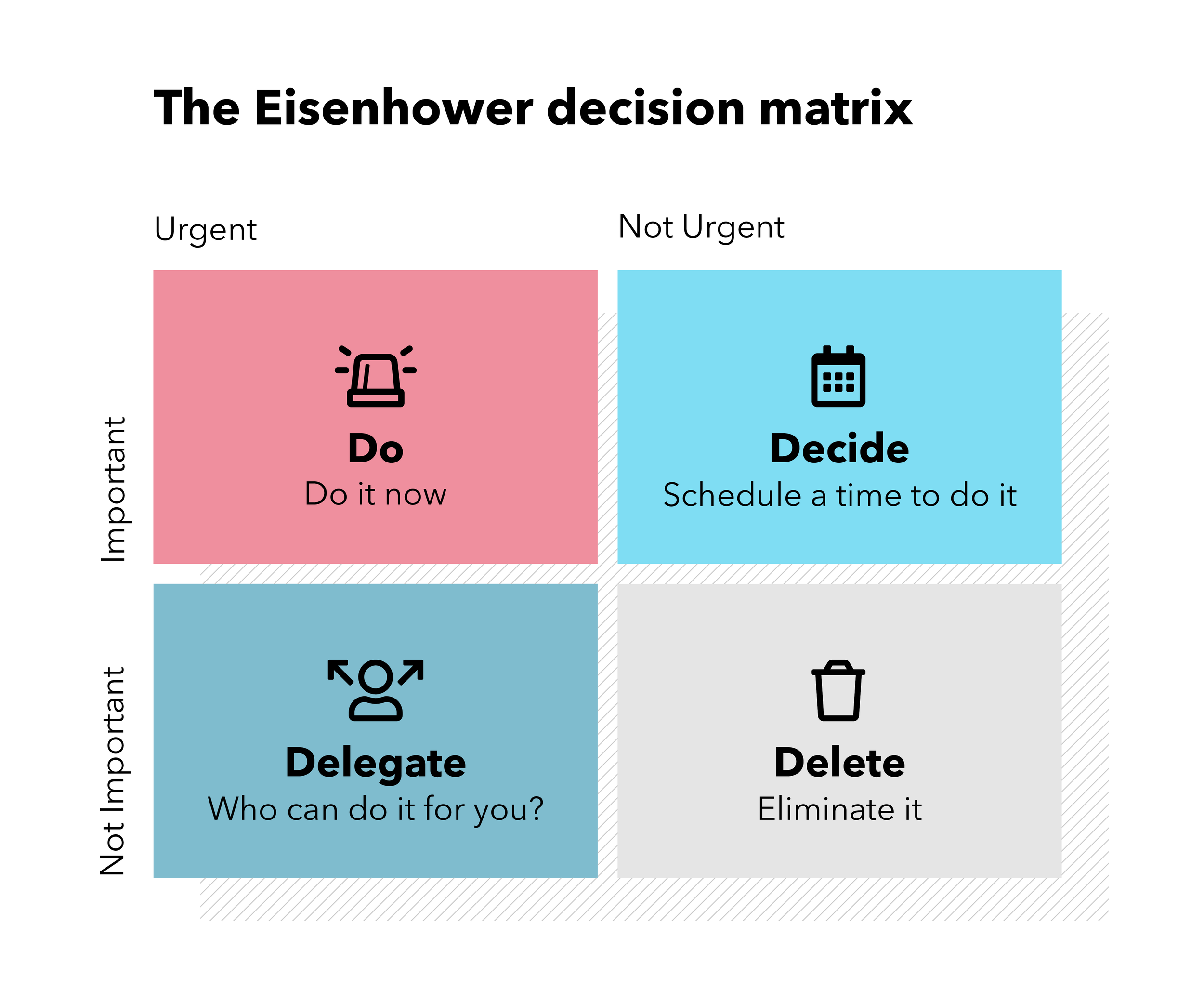
One participant introduced the Eisenhower Decision Matrix. The Eisenhower Decision Matrix argues that leaders should only do things of this nature when it is Urgent and Important, and that Urgent and Not Important work should be delegated. We must as leaders weigh if something is time consuming enough to delegate, or if it can be done quickly enough that we should simply do it ourselves.
Communicating your community values loudly and consistently
The book shared examples of organizations that used catch phrases as a way of making leadership and cultural language easily accessible across the organization. Participants have seen a theme recently of values language in local governments shifting away from one word values to short phrases. These provide more context to what it means in application. Some examples of language like this in core values can be seen here:City of Ripon (this organization uses the acronym CARE regularly to reinforce Commitment, Accountability, Respect, and Enrichment)
One individual remarked that the use of catchphrases reminded them of the use of Gibbs’ rules on the popular show NCIS.

When does protecting a culture veer into problematic territory?
One participant shared that all of these rituals, traditions, catch phrases almost reminded her of her time being in a sorority in college. Greek life is intended to be highly loyal micro communities that are bound through a process of initiation and secretive rituals. Greek life in the United States is also built on a history of racism and exclusion, and some research has pointed that students in Greek life may exercise less safe judgement. The public discourse and sentiment around these inherently exclusive cultures is at a high point right now. We seem to have a natural, human instinct to want to be part of small, closely connected communities. Why does it seem that the most tightly knit communities are bound by trauma? (Again, another topic we explored in Tribe: On Homecoming and Belonging).
Both Tribe and this book shared examples of tight-knit communities of survivors of war horrors and how they had inexplicably tight bonds to one another. Johnson & Johnson’s incident in the 1980s with inadvertent poisoning by tampered Tylenol also came up as a cultural Waterloo moment for the company. This begs the question: Can we create strong groups without the bonds of trauma?
We didn’t have a strong answer, but recognized that human beings have an innate desire to be a part of community. If there are ways to channel that and create a sense of belonging for team members through a strongly developed culture, it’s a good thing. When it gets to the point of harmful exclusion, maybe it’s gone too far.
*FOOTNOTE:
Sadly, Tony Hsieh of Zappos died tragically in a house fire in 2020. The Cost of Happiness podcast documents Hsieh’s life and work in downtown Las Vegas revitalization efforts and at the helm at Zappos.