Book Review: Who Is Government? by Michael Lewis
For our first book of 2026, our Bettering Communities Book Club read our tenth book - Who Is Government? The Untold Story of Public Service by Michael Lewis.
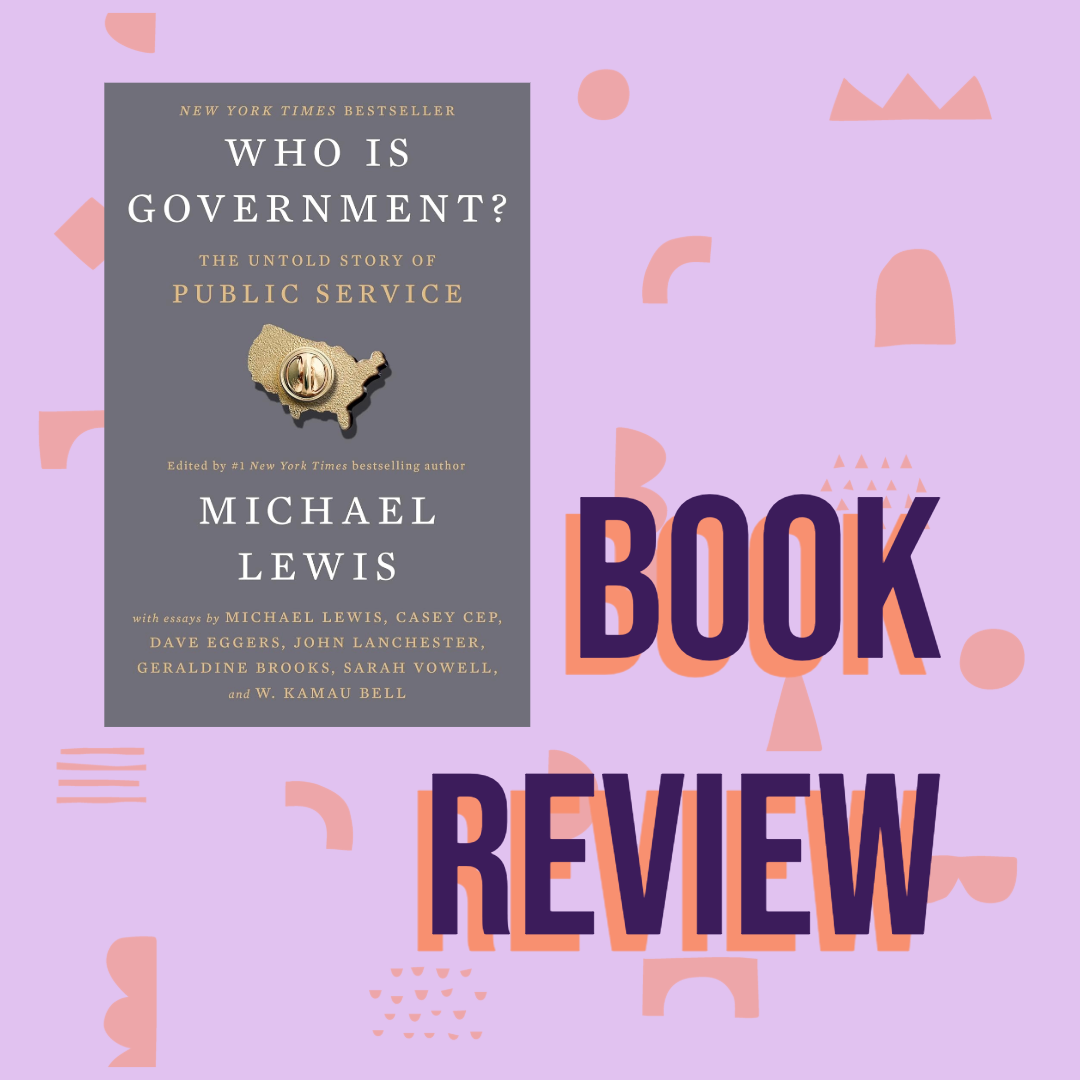
Reactions to the Book
Our group largely enjoyed this book and the refreshing perspectives offered in it about the good done by individuals who work in the federal government. We also appreciated the diversity of writing style as it is an anthology of essays and as such, offers distinct writing styles across the chapters. There were some chapters in the middle that were more data-heavy and more difficult to read, but we all greatly appreciated how the book was “bookended” with stories about everyday American lives being saved by the work of unsung heroes working behind the scenes in federal agencies. It was hard not to read this book and feel just a hair better about the people within the federal government, even if we (on both sides of the aisle) often shake our heads at the behavior of federal elected officials.
We’re all just numbers… or are we?
A fascinating theme in this book was the repeated emphasis that individuals within the behemoth federal government connect with and make a difference for individuals across the mammoth United States. Whether it’s a story of an individual relative of a veteran seeking out their family member’s marker in a national cemetery, or an individual hunting for immigration records of their own family member through the National Archives, or an infectious disease specialist who connects the dots (literally moving heaven and earth) to connect a family in Texas to a rare, but lifesaving drug, that will save their daughter’s life. Yes, the federal government is large - a point that has been driven home in the era of Elon Musk’s DOGE experiment - but these essays offer a reminder that a big government is staffed by individuals who make a fundamental difference in the lives of individual Americans. The books seeks to connect Americans across party lines with a humbling reminder that we are united beyond our political affiliations. As Ron Walters from the National Cemetery Administration reminds us,
“There’s no Republican or Democratic way to bury a veteran.”
Investing in work that doesn’t offer a good return on investment
Another large theme in this book is the idea that the role of government is not to compete with the private sector, but rather to do the research and work that doesn’t make fiscal sense for the private sector to do. Case in point, NASA’s Jet Propulsion Lab, highlighted in one chapter, does the work that will impact generations of future humans - capturing high-quality images of exoplanets in other galaxies to see where (not if) life-supporting ecosystems exist. In the bookending opening and closing chapters of the book, we meet Chris Mark in the Department of Labor, finding ways to work with the mining industry to understand the physics at play in roof collapses and mine shaft design. His work has helped to solve a costly (both financial and human capital) problem that has plagued the industry, but was seen as the cost of doing business. In the closing chapter, we meet Heather Stone in the Food and Drug Administration, a scientist who connects the dots for the family of a daughter dying from a rare infectious brain disease - a disease so rare that clinical trials and pharmaceutical companies would have no return on investment to develop a new drug. Heather’s work enabled her to connect the dots and find another drug that could be repurposed to successfully treat the young girl. Sometimes the work of the federal government seems pointless in the present, but groundwork is being done to provide answers and connect the dots later.
Are we blaming the wrong people in our frustration?
2025 was a year of pointing a finger at employees within the government and accusing them of pushing paper or wasting tax dollars. This book offered a thoughtful rebuttal - pointing out that often individuals within federal agencies don’t want to be in the spotlight. They want to simply put their head down and do work that is meaningful. The individuals who should, perhaps, capture our attention and our frustration are those with the microphones attempting to manipulate our perception. A passage that reinforces (and perhaps encourages a redirection) of our frustration:
“Every government worker from the head of the department to the janitor is, understandably, hypersensitive about being portrayed as part of the “deep state” or the “swamp”. The fact is that federal employees go to work everyday with the explicit job description of making the lives of everyday Americans better… these employees aren’t lazy or consiprinig how to make Americans’ lives harder. They aren’t allowed to noodle around with ideas for too long without showing real-world progress. And if they did want to cause problems and noodle around all day, there’s a more efficient way to do that: become a member of Congress.”
How do we ensure that people understand our own work?
Many of the members of the Bettering Communities Book Club either work in local government or for non-profit organizations whose work hinges on decisions of state and federal government agencies. It struck us that just as we have no idea who the individuals are working behind the scenes of the federal government, there are many who do not know what happens in the organizations where we work. There was not always a questioning attitude presuming that public or independent sector employees weren't a good return on investment. In this new era of distrust, the burden is on us to tell our success stories and connect the dots for the public on why the work we do benefits them. Elected officials (in their efforts to seek campaign contributions and our votes) will always tell their stories or rely on the fourth estate to do so for them, but those who are not politically motivated not only don't tell their own stories, but may be discouraged from doing so. As a closing note, I'll share this sentence from the introduction:“On top of every federal agency sit political operatives whose job is not to reveal and explain the good work happening beneath them but to prevent any of their employees from embarrassing the president. The PR wing of the federal government isn’t really allowed to play offense, just a grinding prevent defense.”
You can learn more about this book in this review in The Guardian.